Wednesday, October 21, 2026



Editor’s Note: This story is the first in a series examining the growing entrepreneurial ecosystem in North Central Washington. Produced in partnership with the NCW Tech Alliance and Flywheel Investment Conference, the series will highlight the people and ideas helping shape the region’s startup landscape — from angel investors to founders building new companies across the Wenatchee Valley and beyond. Through these stories, Ward Media will explore how local capital, mentorship and community partnerships are working together to support innovation, create jobs and strengthen the regional economy.
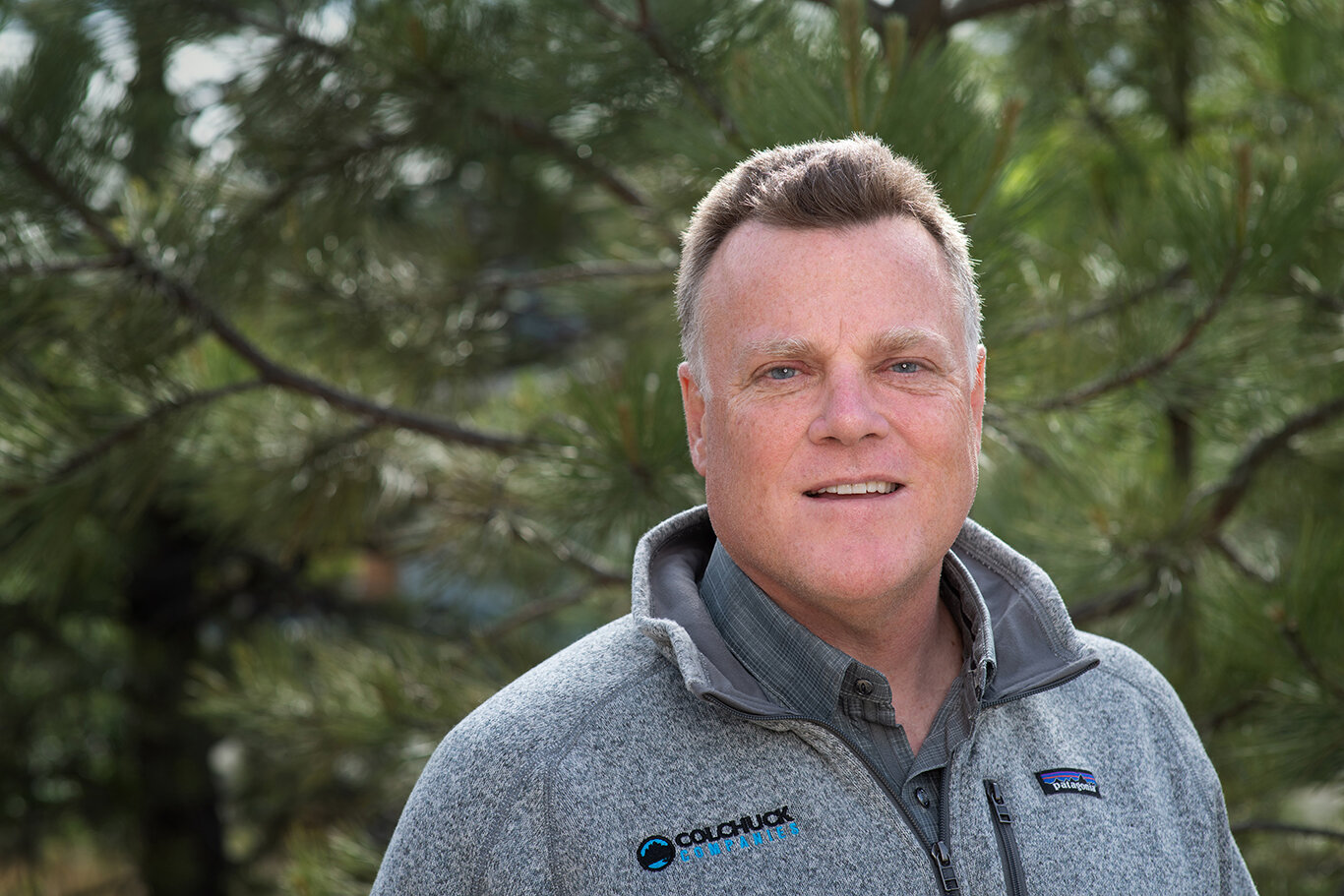
When Tim Jenkins talks about investing, he rarely begins with returns, valuations or term sheets. Instead, he talks about human flourishing — the idea that capital should not only generate financial gains but also make people’s lives measurably better.
For the past dozen years, Jenkins has helped shape the startup and small-business landscape in and around Washington state. He has also become an important figure in Flywheel Investment Conference, the Wenatchee Valley–based pitch event and investor network that connects founders with angel investors from across the region.
“I don’t really believe in retirement,” he said.
That mindset helped propel Jenkins from a long career in management consulting into a second act as a full-time private investor — one who is as interested in bakery ovens and medical devices as he is in balance sheets.
Jenkins’ path to angel investing began in what might seem like a very different professional world.
He spent more than two decades in management consulting, much of it focused on the technology sector. After earning an MBA in finance, Jenkins expected to put his financial training to work right away. Instead, he built a consulting career that eventually led him to co-found his own firm.
The company grew into a national consulting firm and was sold to its employees about 12 years ago. A later sale to a private equity firm created a second “liquidity event.”
Those milestones gave Jenkins something he hadn’t had before: both capital and the freedom to rethink his professional path.
“The initial event left me with a sum of money, and I realized I wasn’t going to retire,” he said. “So I thought, this is a great time to make a career shift.”
He had dabbled in angel investing and real estate previously, but an early angel investment in the early 2000s was a wake-up call. If he was going to pursue investing seriously, he decided, he would approach it the same way he had approached consulting — analytically and professionally.
Today Jenkins runs Colchuck, a multi–asset class investment fund that includes real estate, private credit, private equity and venture capital. The portfolio now includes more than 200 investments, including roughly 35 direct venture investments as well as exposure through venture funds. Jenkins works with two colleagues based in Park City, Utah, while he himself has long been based in Leavenworth.
One of the first things Jenkins emphasizes when discussing angel investing is that it is often misunderstood.
“People often mistake angel investing for venture capital,” he said. “Venture capital is a really discrete part of the investing industry. They’re looking for those moonshot investments—the Googles and the OpenAIs.”
Angel investing, particularly in smaller regional economies, operates differently. Jenkins often describes it as closer to “micro private equity.”
Rather than chasing the next global tech giant, angel investors frequently back companies that may not attract traditional venture capital but can still become profitable, durable businesses that serve their communities.
“We’re really helping startups and business formation,” Jenkins said. “These are viable, great businesses that serve the community, but they’re not really set up to be venture capital companies.”
He sees that role as especially important in regions like North Central Washington. The goal is not to replicate Silicon Valley, he said, but to help local entrepreneurs turn ideas into sustainable companies that create jobs and services close to home.
To illustrate that philosophy, Jenkins often points to an investment much closer to home: Bosket Bread.
The commercial bakery now supplies breads and rolls to restaurants across the valley, from Leavenworth and Stevens Pass to Wenatchee.
The company’s founder, Jenkins said, was a younger metalworker who dreamed of opening a commercial bakery inspired in part by his father. He had the skill and the vision, but lacked the collateral and track record needed to secure a traditional bank loan.
“There was no way he could have got a bank loan at that point,” Jenkins said. “He needed money for ovens, an industrial space, a delivery van—all of it.”
Jenkins helped structure funding that allowed the bakery to launch. Several years later, the business is thriving, with the loan paid back early and the company employing people locally while supplying restaurants across the valley.
“I think everyone is excited that there’s a local commercial baker in the valley, and they’re not reliant on Cisco and the big guys,” he said. “That’s really our goal—use our capital to help create new businesses like that.”
Jenkins first encountered Flywheel in 2019 after a friend suggested he attend the event.
“I just bought a ticket and showed up the first year,” he said. “I thought it was great. I met a number of new people and saw a few people I already knew.”
By 2020 — even during the event’s remote COVID-19 year — Jenkins had become more involved. In 2022, he took on a larger role by co-managing the Flywheel investment fund alongside his daughter, Abby, who works with him in Park City.
The conference has grown into a significant regional event, drawing founders and investors from across the Pacific Northwest.
Jenkins said Flywheel stands out for two reasons.
First is location. Startup pitch events typically take place in major investment hubs such as Seattle, the San Francisco Bay Area or New York. Flywheel, by contrast, turns Wenatchee into a destination for investors.
Second is the focus on community-building. The event encourages regional investors — including many who own second homes in the Wenatchee Valley — to think about how their capital can shape the communities where they spend time.
“It induces people to the Wenatchee Valley,” Jenkins said. “It helps with business formation, brings the investor community together, and gets them thinking about how they’re impacting their community with their capital.”
If Bosket Bread represents the local side of Jenkins’ investing philosophy, another Flywheel-backed company highlights the potential for global impact.
In 2022, when Jenkins and his daughter co-managed the Flywheel fund, the unanimous winner of the pitch competition was BrainSpace, a Bothell-based startup founded by Caitlin Morse.
The company is developing technology designed to modernize how hospitals monitor intracranial pressure in patients with traumatic brain injuries.
The current standard, Jenkins said, has changed little in more than a century. Patients often must remain still and sedated while fluid levels are monitored through a drain system that requires constant oversight.
BrainSpace has developed a portable system that allows patients greater mobility while collecting cleaner and more comprehensive data.
“It’s better for everyone,” Jenkins said. “Better for the patient and their family, better for the hospital and caregivers, better for researchers. And it doesn’t cost more—in fact, it can cost less because there’s less labor.”
When Morse first considered attending Flywheel, she was unsure whether the trip to Wenatchee would be worthwhile. Jenkins and his daughter encouraged her to attend.
She did — and impressed investors.
Since then, BrainSpace has secured FDA clearance and is preparing to bring its product to market. In addition to Flywheel funding, the company has raised millions of dollars from investors connected through the Flywheel network.
“It's just super exciting to be able to come alongside a company like that,” Jenkins said. “I think we're going to make money on this company, but it's also going to benefit a lot of people. That's just the most wonderful thing about it.”
Across a diverse portfolio, Jenkins evaluates companies through several key stages.
At the earliest stage, he focuses primarily on founders.
“There’s a term called founder–market fit,” he said. “Do I believe this team can pull off what they’re proposing?”
Once a product exists, the focus shifts to product–market fit — whether the offering truly meets market demand and whether that demand can grow.
At later stages, execution becomes the central question.
“Do I believe the team can scale this business to a point where we get paid back, plus a nice profit?” he said.
Jenkins also pays close attention to the total addressable market, or TAM. Even promising companies may struggle to deliver strong returns if their markets are too small.
“As an investor, your job is to allocate capital to its highest and best use,” he said. “If you put money into something that’s only going to deliver a low return relative to the alternatives, there’s an opportunity cost you can’t ignore.”
At the same time, Jenkins and Colchuck evaluate investments through an impact lens, considering how companies contribute to human flourishing.
“It’s not either-or,” he said. “We want to see that this is going to return our capital with a strong financial return, and also have an impact on human flourishing.”
For Jenkins, investing rarely ends with writing a check.
“When we make a big investment, we always say, ‘We’re all in. We’re on your team. We’re going to try to help you,’” he said.
That support can include making introductions, offering strategic advice, serving on boards and mentoring founders through major decisions.
“We think about that when we make an investment,” he said. “Do we like these people? Do we want to work with them? Can we add value and really help move the needle on their success?”
When entrepreneurs ask how to prepare for Flywheel, Jenkins’ advice is simple.
“I tell them to relax,” he said. “It seems daunting, but almost universally, the companies that make the final six are blown away by how friendly and supportive it is.”
Investors, he said, are not there to tear founders down but to help them improve their ideas and sharpen their pitches. Many companies benefit from the feedback even if they do not win the competition.
“A lot of the companies get additional investment from investors outside the Flywheel fund,” he said. “At this point, it’s probably in the millions of dollars.”
For Jenkins, that broader impact is the true story of Flywheel — an event that does more than award a single investment.
By connecting capital, entrepreneurs and community, he believes the conference is helping create companies that benefit both local economies and people’s lives.
And that, he said, is the real goal of investing.
Serious financial returns matter. But so does something more enduring: helping businesses grow in ways that improve communities and advance human flourishing.


Comments
No comments on this item Please log in to comment by clicking here