Thursday, October 1, 2026

There was a time when waiting was normal.
If something happened in town, people didn’t immediately assume the worst. They didn’t instantly label it. They didn’t rush to assign motive. They waited for details. They asked questions. They listened. They let information arrive before they decided what it meant.
That habit is disappearing.
Today, speed is treated like a virtue.
We are surrounded by systems that reward immediate reaction. News cycles move fast. Social media moves faster. Rumors move fastest of all. The first version of a story spreads before anyone has time to confirm it, and once it’s out there, it becomes hard to pull back. Correction doesn’t travel as far as emotion does.
Being first now matters more than being right.
You can feel this shift everywhere.
Someone posts a screenshot with no context, and people rush to comment. A short clip appears from a meeting, and conclusions are formed in minutes. A police response is seen in town, and speculation fills the gap before facts have a chance to catch up. The most confident explanation becomes the most accepted one, even if it’s based on almost nothing.
Reaction becomes the default.
The problem isn’t that people care. Caring is good. Staying informed is good. Paying attention is a sign of investment in the community.
But caring without restraint turns into something else.
When speed replaces judgment, we stop thinking and start firing. We don’t ask what we know, what we don’t know, and what we’re assuming. We don’t leave room for missing details. We don’t give others the benefit of time. We react first, then defend the reaction as if it were a principle.
And that’s where damage happens.
It’s one thing to be wrong privately. It’s another thing to be wrong loudly.
A fast reaction can cost someone their reputation. It can widen conflict. It can put stress on a family or a business. It can distort what actually happened. And once people dig in, even a clear correction often isn’t enough to unwind the harm.
The pace of our responses has become disconnected from the weight of what we’re responding to.
It’s easy to think this is just the internet being the internet, something to shrug off.
But this shows up in real life.
In our local public discussions, you can see how quickly people assume bad intent. You can see how quickly disagreements escalate. You can see how fast conversations become personal. Too often, people are no longer listening to understand. They’re listening for an opening. They are reacting, not reflecting.
And when enough people do that, communities start to change.
Trust erodes. Not because people disagree, but because fewer people believe the other side is acting honestly. Public meetings become tense. Conversations become shorter. People stop showing up, not because they don’t care, but because the environment no longer feels productive.
It becomes harder to build anything together.
This isn’t a call for everyone to speak less. It’s a call for everyone to slow down.
There is strength in restraint.
There is maturity in waiting for more information. There is wisdom in withholding judgment until you have enough facts to make one. There is character in being careful with other people’s reputations and careful with your own influence.
Not everything deserves an immediate opinion.
Not everything requires a public reaction.
Sometimes the most responsible thing a person can say is, “I’m going to wait until I know more.”
That kind of pause used to be normal.
It can be again.
We don’t need to move at the speed of rumor. We don’t need to treat every issue like an emergency. We don’t need to contribute to the noise just to prove we’re paying attention.
A community is healthier when people react with judgment, not adrenaline.
If we want better conversations, better decisions, and stronger trust, it starts with one simple habit we can all practice:
Pause first. Then decide what you really think.
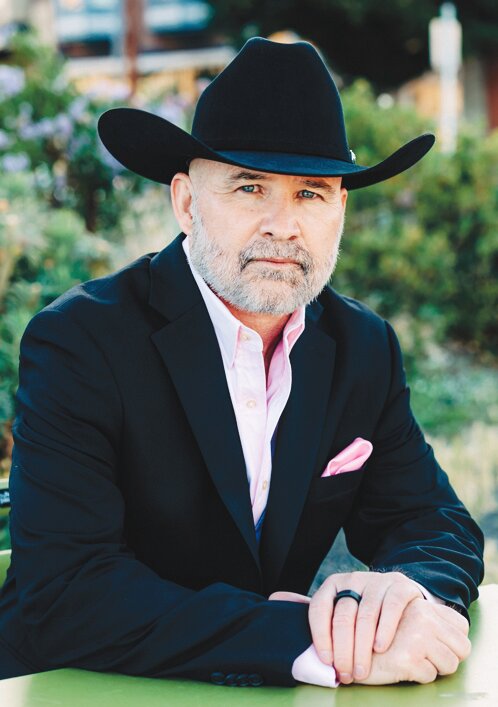
Terry Ward is the CEO of Ward Media and the publisher of NCW News, Cashmere Valley Record, Lake Chelan Mirror, The Leavenworth Echo, Quad City Herald, and the Wenatchee Business Journal. He can be reached at terry@ward.media.


Comments
No comments on this item Please log in to comment by clicking here