Monday, October 26, 2026

There was a time when most of us were perfectly comfortable being bad at things.
As children, we drew pictures that barely resembled what we were trying to draw.
We sang loudly without worrying whether we were on key.
We threw balls that went in the wrong direction, rode bicycles until we fell over and attempted things simply because they looked like fun.
Nobody handed us a performance review afterward.
We were beginners.
And we were perfectly fine with it.
Somewhere along the way, that changed.
As adults, we become much more careful about the things we're willing to try. We gravitate toward activities we know we're good at. We become conscious of looking foolish. We worry about failing or being judged.
If we can't do something well, many of us would rather not do it at all.
I wonder what we lose because of that.
There is tremendous value in doing something badly.
Not intentionally, of course.
I'm not suggesting we should aspire to mediocrity or stop trying to improve.
I'm talking about giving ourselves permission to be beginners again.
Think about the last time you tried something completely new.
Maybe you picked up a golf club for the first time.
Tried learning another language.
Attempted a new recipe.
Picked up a musical instrument.
Took a dance class.
Learned a new piece of technology.
Chances are, you weren't very good at it.
That's the point.
Being a beginner forces us into an uncomfortable position.
We have to ask questions.
We have to accept instruction.
We have to make mistakes.
We have to admit there are things we don't know.
And perhaps most importantly, we have to be willing to laugh at ourselves occasionally.
Those are useful skills far beyond whatever activity we're trying to learn.
Competence is comfortable.
Being a beginner is humbling.
The more experienced we become in our careers and our lives, the easier it is to surround ourselves with things we already understand. We develop routines. We become confident in our abilities. People begin coming to us for answers.
That feels good.
Starting over at something doesn't.
Suddenly, someone else knows more than we do.
Suddenly, the answer isn't obvious.
Suddenly, we need help.
There is something healthy about that.
It reminds us what it feels like to struggle.
It makes us more patient with other people who are learning.
It reminds us that expertise is usually the result of hundreds of mistakes nobody saw.
And occasionally, it introduces us to something we never knew we would love.
Somewhere along the way, many of us stopped doing things for the joy of doing them and started believing everything needed to be done well enough to justify doing it.
But not everything needs to become an accomplishment.
You don't have to sell the painting.
You don't have to win the race.
You don't have to perform the song for anyone.
You don't have to turn the hobby into a side business.
Sometimes it is enough to enjoy learning how to do something you couldn't do yesterday.
I think there is a community lesson in this, too.
Healthy communities depend on people willing to step into roles for which they may not feel completely prepared.
The first-time volunteer.
The new coach.
The person attending their first city council meeting.
The parent who agrees to help with an event despite having no idea what they're doing.
The person who joins a nonprofit board and spends the first several meetings mostly listening.
The neighbor who decides to organize something because nobody else has.
If everyone waited until they felt completely qualified, a lot of important things would never happen.
Most of us learned the important parts of our lives by doing them before we were particularly good at them.
We learned to be parents by becoming parents.
We learned to lead by accepting responsibility.
We learned our professions by making mistakes, asking questions and gaining experience.
We learned to navigate life largely by living it.
Maybe we should give ourselves permission to keep doing that.
Try something you're not good at.
Take the class.
Join the group.
Pick up the instrument.
Volunteer for something unfamiliar.
Ask the question you think everyone else already knows the answer to.
Be willing to look a little foolish.
You may discover that you're terrible at it.
That's OK.
You may also discover something you love.
Either way, you'll have done something increasingly rare in adulthood.
You'll have given yourself permission to be a beginner again.
And sometimes the only way to become good at something is to first be willing to be bad at it.
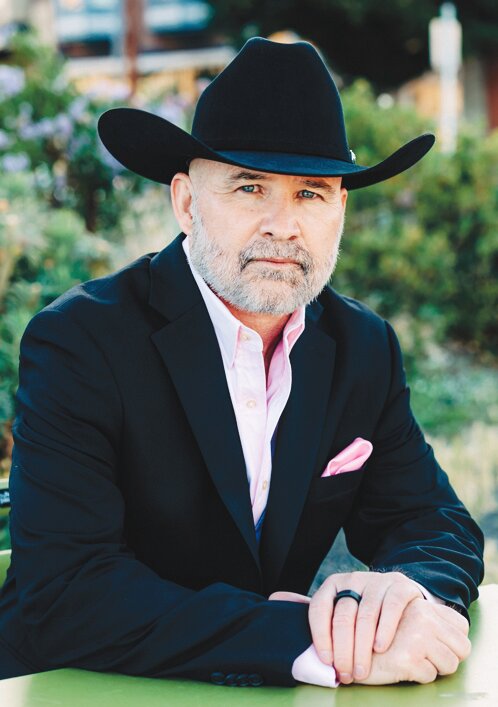
Terry Ward is the CEO of Ward Media and the publisher of NCW News, Cashmere Valley Record, Lake Chelan Mirror, The Good Life, The Leavenworth Echo, Quad City Herald, and the Wenatchee Business Journal. He can be reached at terry@ward.media.


Comments
No comments on this item Please log in to comment by clicking here